Resources
Role of Real-World Data and Real-World Evidence for Self-Care Products
Real-World Data (RWD) and Real-World Evidence (RWE) not only play an increasingly significant role in the pharmaceutical sector, but also the consumer health industry.
It has become recognized that important product information can be garnered during routine practice and not only in highly controlled clinical trials. The utility of RWD and RWE was originally demonstrated for prescription drugs and until recently there has been comparatively little focus on the potential role of RWE for self-care products (viz. non-prescription medicines and food supplements). This can be attributed to the nature of their purchase by consumers sometimes without the intervention of health care professionals (HCPs), that prescription, reimbursement, and electronic health records, etc. are not routinely captured. With the advent of new data mining technologies, some of these challenges have been overcome and real-world methodologies are gaining traction as promising approaches to optimize the development, marketing, and usage of self-care products (non-prescription medicines & food supplements).
The Critical Role of Rx-to-OTC Switches in Empowering Health and Expanding Access
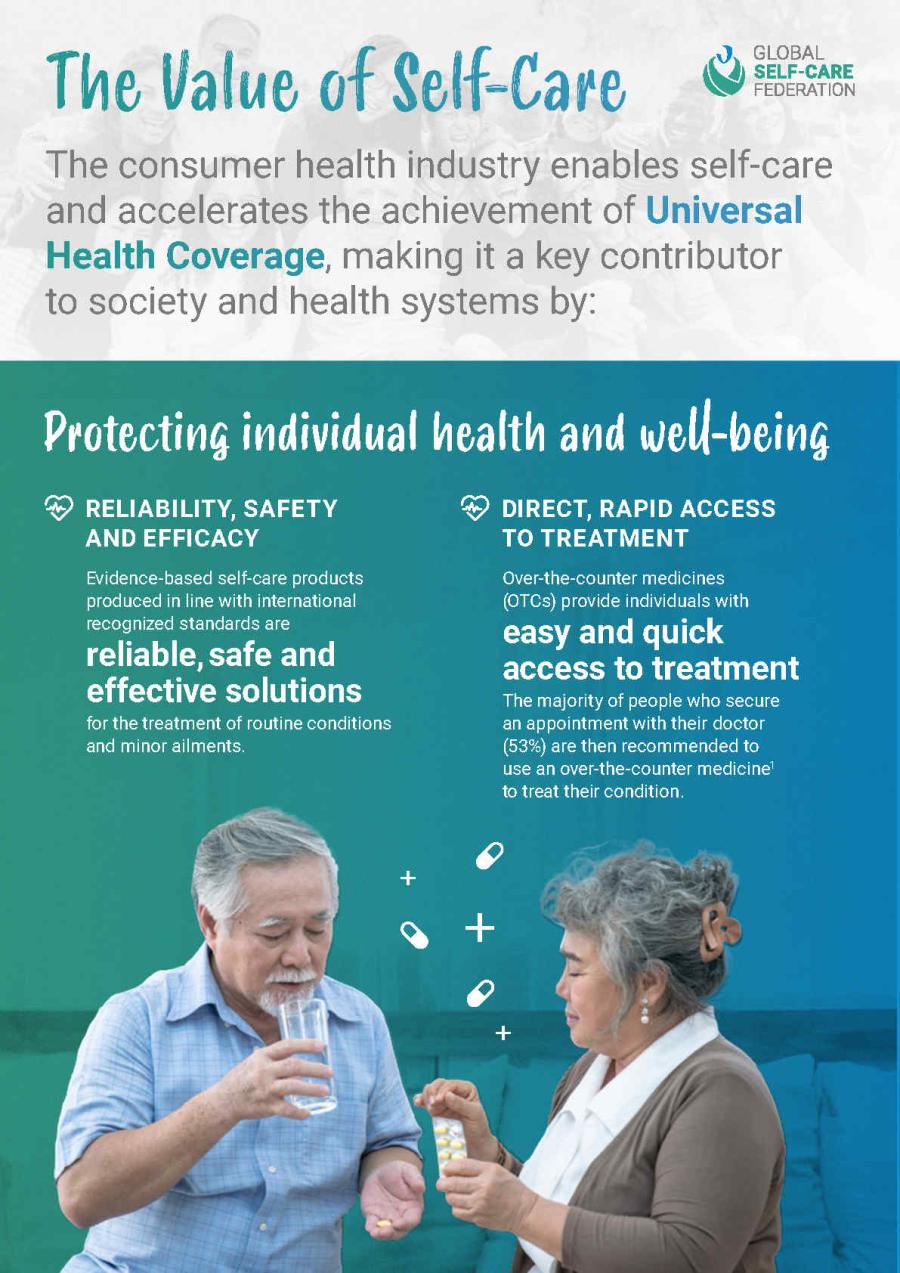
Self-care, as defined by the World Health Organization (WHO), is the ability of individuals, families, and communities to promote health, prevent disease, maintain health, and cope with illness and disability, with or without professional healthcare support.
This broad concept encompasses everything from healthy diets and mindfulness to non-prescription medications and self-monitoring of health conditions.
Self-care, when practiced through the use of non-prescription medicines (NPM), offers significant benefits to individuals, healthcare systems, and public health – yielding an estimated $119 billion savings per year globally, with projections rising to an estimated $179 billion by 2030 2. Self-care empowers individuals and communities to manage their health and well-being; it strengthens national institutions by facilitating efficient use of domestic health resources; and it improves primary healthcare and accelerates progress towards achieving universal health care (UHC), a critical long-term goal for WHO. These benefits are particularly important as healthcare systems face growing sustainability challenges, including workforce shortages, rising costs, and increasing demand for services, all of which create barriers to timely access and strain existing resources.
Risk-Based Regulatory Framework for Non- Prescription Medicines
Self-care is a foundational element for achieving universal health coverage (UHC). Empowering individuals to manage minor ailments through appropriate self-care reduces pressure on health services and improves overall health outcomes, even as healthcare systems grapple with demographic shifts, rising chronic disease burdens, and limited resources.
Non-prescription medicines (NPM) play a central role in this transformation. These products, which can be used safely and effectively without the direct supervision of a healthcare provider, allow individuals to treat self-treatable conditions and minor ailments such as pain, allergies, and gastrointestinal discomfort, thereby reserving clinical care for more complex needs